Feature spec
Goal: Send a clear invoice after finishing a job.
- Add a client, line items, a due date, and payment instructions.
- Preview the total before exporting a PDF.
- Keep an editable draft if export fails.
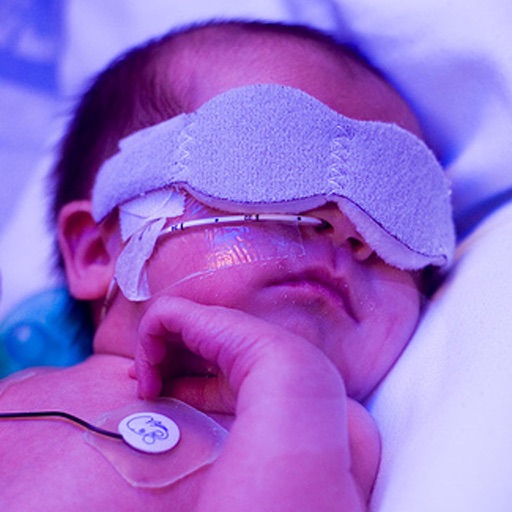
Designed by a pediatrician, BiliCalc uses the American Academy of Pediatrics 2004 "Management of Hyperbilirubinemia in Infants Greater than 35 Weeks of Age" to calculate the threshold for starting phototherapy based o...
$1.99 · In-app purchases
Evidence scope: No current overall US chart position is available. Category-chart positions shown in discovery are a separate scope. Revenue is a directional model estimate, not verified earnings.
A product spec, screen plans, and build steps for your coding agent.
First kit free with a verified email
Combine features and design from your favorite apps.
Kit ready. Verify your email to download it.
Generating… usually about a minute.
What should your app do differently? Your note travels with the kit so your coding agent builds around your idea.
A product spec, phased build plan, differentiation notes, and screen references.
Illustrative example: an invoice app for independent contractors. Your kit is tailored to the app you choose; this is not its generated content.
Goal: Send a clear invoice after finishing a job.
Invoice editor: Client at the top, editable line items in the middle, total and preview action at the bottom.
States: Empty draft, validation errors beside each field, exporting, and a retry action that preserves the draft.
Hypothesis: Contractors need faster repeat invoices more than more templates.
First experiment: Test duplicating a previous job with five contractors. Watch where they hesitate before expanding the feature set.
The full kit adds a phased build plan, evidence notes, tool prompts, and implementation guidance. It is a plan for your coding agent, not a finished app.
Usage: Mechanics are fair game; never reuse the original name, branding, assets, or verbatim copy.
JavaScript is required to complete mailbox verification.
Good fit for mobile-first iOS and Android prototypes with managed app scaffolding.
Rork plan preview for BiliCalc: map the core Medical workflow, choose the smallest differentiated feature set, define the data and monetization boundaries, then prototype the riskiest user journey first.
Preview ready. Verify your email to reveal and copy the full prompt.
JavaScript is required to complete mailbox verification. Return to this prompt preview.
Affiliate link: CloneChart may earn a commission at no extra cost
These are generated suggestions, not verified review quotations. Check current App Store reviews and speak with users before treating a possible gap as a requirement.
Hypothesis 1
Assumption to check: Limited functionality compared to comprehensive medical apps
Validate with people who use this workflow before building.
Hypothesis 2
Assumption to check: Low user ratings due to bugs and crashes
Validate with people who use this workflow before building.
Hypothesis 3
Assumption to check: In-app purchases can be confusing
Validate with people who use this workflow before building.
Hypothesis 4
Assumption to check: Lack of user engagement features
Validate with people who use this workflow before building.
Original App Store material. Ratings and screenshots describe the existing app, not proof of demand for your version.
Designed by a pediatrician, BiliCalc uses the American Academy of Pediatrics 2004 "Management of Hyperbilirubinemia in Infants Greater than 35 Weeks of Age" to calculate the threshold for starting phototherapy based on the patient's age, bilirubin level, and neurotoxicity risk. Values are now displayed on the phototherapy nomogram. In addition, it will also tell you the patient's risk zone using the Bhutani Nomogram. Allows direct age input and includes the option to calculate age from birth and lab sample times. The app has a direct link to source journal articles, nomograms, and a list of the neurotoxicity risk factors. Supports US and SI units (mg/dL and µmol/L). App Feature Summary -Calculates phototherapy threshold for newborns 35 weeks and older -Displays values on phototherapy nomogram -Suggests time frame for followup bilirubin levels based on patient risk zone -Direct links to reference journal articles ********************************** Frequently Asked Questions ********************************** 1. I think the graph is backwards. Why is low risk on top and high risk on bottom? The graph is directly from the 2004 AAP Hyperbilirubinemia Guidelines. The degree of "risk" refers to the infant's risk for developing neurotoxicity. This is different than the Bhutani Nomogram in which "risk" refers to the risk for development of severe hyperbilirubinemia. The threshold for treatment (when a data point lies above one of the lines on the graph) of the infant is different based on the predisposing factors (divided into the three risk categories). Babies who are "low neurotoxicity risk," can tolerate higher levels of bilirubin than a baby with medium or high risk. Therefore, a high risk baby will be treated at lower bilirubin levels than a low risk baby. The graph is correct in having low risk on top since a higher value is needed to pass the threshold for treatment (phototherapy). Please see the graph here for verification as well: http://bit.ly/AppPWU. Please email if you have further questions. ****************************************** Intended for use by pediatricians, neonatologists, physicians, medical students, and pediatric nurses who treat newborn infants in the hospital and as outpatients. BiliCalc should be used only as a reference aid. The information contained in the app should not be used as a substitute for the exercise of professional clinical judgement. Please contact the developer if you find any errors. Keywords: bilitool, bilitool.org, jaundice, hyperbiliubinemia
Written user reviews are not shown here. Check current App Store reviews >
Plan a focused first version with your coding agent. These are planning assumptions, not a delivery guarantee.
Choose one audience and one core workflow. Use the kit to agree on its screens, data, and acceptance criteria before building.
Decide which secondary features, integrations, and platform support can wait. Your version does not need to reproduce everything in the original.
Validate external services, specialist technology, data access, and ongoing costs for your chosen scope.
From the Build Kit assessment.
A reliable timeline needs an agreed scope and a technical check. Ask your agent to estimate the phases in BUILD_PLAN.md after that review.


