Feature spec
Goal: Send a clear invoice after finishing a job.
- Add a client, line items, a due date, and payment instructions.
- Preview the total before exporting a PDF.
- Keep an editable draft if export fails.
Developed in collaboration with Stanford University School of Medicine
$4.99 · In-app purchases
Evidence scope: No current overall US chart position is available. Category-chart positions shown in discovery are a separate scope. Revenue is a directional model estimate, not verified earnings.
A product spec, screen plans, and build steps for your coding agent.
First kit free with a verified email
Combine features and design from your favorite apps.
Kit ready. Verify your email to download it.
Generating… usually about a minute.
What should your app do differently? Your note travels with the kit so your coding agent builds around your idea.
A product spec, phased build plan, differentiation notes, and screen references.
Illustrative example: an invoice app for independent contractors. Your kit is tailored to the app you choose; this is not its generated content.
Goal: Send a clear invoice after finishing a job.
Invoice editor: Client at the top, editable line items in the middle, total and preview action at the bottom.
States: Empty draft, validation errors beside each field, exporting, and a retry action that preserves the draft.
Hypothesis: Contractors need faster repeat invoices more than more templates.
First experiment: Test duplicating a previous job with five contractors. Watch where they hesitate before expanding the feature set.
The full kit adds a phased build plan, evidence notes, tool prompts, and implementation guidance. It is a plan for your coding agent, not a finished app.
Usage: Mechanics are fair game; never reuse the original name, branding, assets, or verbatim copy.
JavaScript is required to complete mailbox verification.
Good fit for mobile-first iOS and Android prototypes with managed app scaffolding.
Rork plan preview for Muscle System Pro III - iPhone: map the core Medical workflow, choose the smallest differentiated feature set, define the data and monetization boundaries, then prototype the riskiest user journey first.
Preview ready. Verify your email to reveal and copy the full prompt.
JavaScript is required to complete mailbox verification. Return to this prompt preview.
Affiliate link: CloneChart may earn a commission at no extra cost
These are generated suggestions, not verified review quotations. Check current App Store reviews and speak with users before treating a possible gap as a requirement.
Hypothesis 1
Assumption to check: Limited interactivity in 3D models
Validate with people who use this workflow before building.
Hypothesis 2
Assumption to check: High price point for full features
Validate with people who use this workflow before building.
Hypothesis 3
Assumption to check: Cluttered navigation
Validate with people who use this workflow before building.
Hypothesis 4
Assumption to check: Lack of community features
Validate with people who use this workflow before building.
Original App Store material. Ratings and screenshots describe the existing app, not proof of demand for your version.
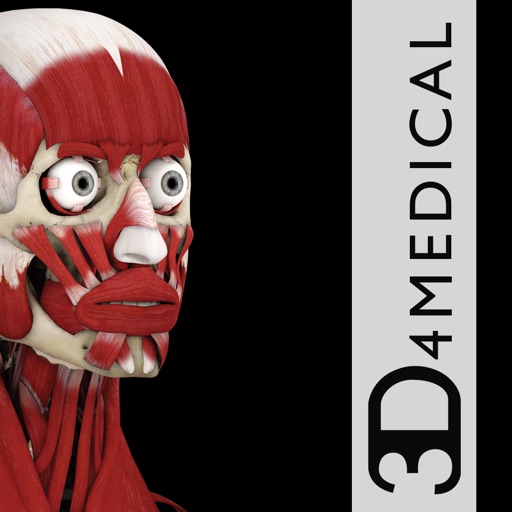
Developed in collaboration with Stanford University School of Medicine. As featured in the WWDC 2012 Keynote Speech. The Muscle System Pro III is used by most universities and is now the standard learning/reference tool for students and medical professionals. Now with 215 movement animations, 425 audio pronunciations, 548 isolated muscles and 548 muscle Insertion and Origin maps (You can toggle between muscles and their attachment points on the bone). For a 2 minute overview of how this app works - please visit: http://applications.3d4medical.com/muscle_pro.php This app is by far the the most comprehensive musculoskeletal system on the market. • 360 horizontal degree rotation of any body part - with a swipe of your finger. • Rotate vertically for inferior and superior views where applicable. • 10 layers of superficial and deep muscle. • New 3D level with insertion / origin points mapped onto bone. • 548 isolated muscles and insertion/origin points (mapped onto the bone) • 215 animations of every movement of each articulation (e.g. flexion, extension, abduction, adduction, etc) • 2 types of Quiz, Drag and Drop and Multi-choice - with ability to test on specific areas or muscles. • 425 audio pronunciations, for every label. (Please ensure your language is set to English in settings for pronunciations to work) • Draw on any screen image and then share it through email, Facebook or Twitter. OTHER NEW FEATURES: • Graphical Hints: On screen hints that can be turned on or off, for a complete understanding of all the app's features. • Interface: Completely rebuilt to allow for simple navigation. • Mix layers: Make one layer semitransparent to compare against another layer. • Public Notes: Post or browse through shared public notes. OTHER FEATURES: • Double Tap to zoom - zoom into and identify any region or muscle by tapping on the screen. • Customize Pins - add your own pins and notes or add notes to existing pins. • Jump to a different area of the body - jump to a different body area by tapping or dragging the white box on the full body thumbnail. • Customize the app - using the settings function the user can choose which pins appear within the app - customize to different levels, i.e. high school, nurses etc… This app’s primary use is as a learning tool but can also be used as a fast and innovative reference tool by utilizing the index function which allows the user to select a muscle and the app will automatically zoom in and identify it. Additionally, this app is ideal for physicians, educators or professionals, in helping to locate a muscle and / or explain its relevance for certain conditions, ailments and injuries.
Written user reviews are not shown here. Check current App Store reviews >
Plan a focused first version with your coding agent. These are planning assumptions, not a delivery guarantee.
Choose one audience and one core workflow. Use the kit to agree on its screens, data, and acceptance criteria before building.
Decide which secondary features, integrations, and platform support can wait. Your version does not need to reproduce everything in the original.
Validate external services, specialist technology, data access, and ongoing costs for your chosen scope.
From the Build Kit assessment.
A reliable timeline needs an agreed scope and a technical check. Ask your agent to estimate the phases in BUILD_PLAN.md after that review.


