Feature spec
Goal: Send a clear invoice after finishing a job.
- Add a client, line items, a due date, and payment instructions.
- Preview the total before exporting a PDF.
- Keep an editable draft if export fails.
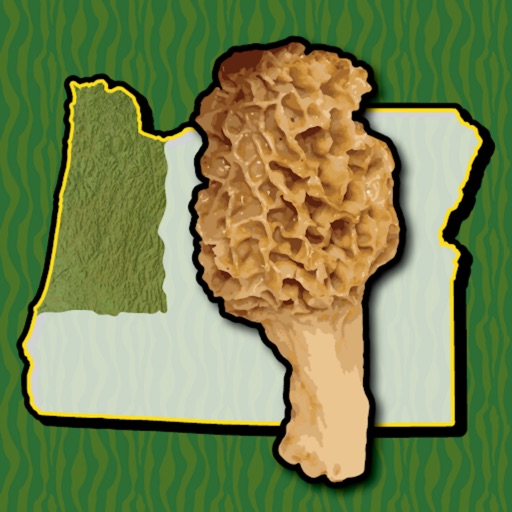
The forests and woodlands of the Pacific Northwest are ecosystems rich with edible wild mushrooms if you know where to look
$2.99 · In-app purchases
Evidence scope: No current overall US chart position is available. Category-chart positions shown in discovery are a separate scope. Revenue is a directional model estimate, not verified earnings.
A product spec, screen plans, and build steps for your coding agent.
First kit free with a verified email
Combine features and design from your favorite apps.
Kit ready. Verify your email to download it.
Generating… usually about a minute.
What should your app do differently? Your note travels with the kit so your coding agent builds around your idea.
A product spec, phased build plan, differentiation notes, and screen references.
Illustrative example: an invoice app for independent contractors. Your kit is tailored to the app you choose; this is not its generated content.
Goal: Send a clear invoice after finishing a job.
Invoice editor: Client at the top, editable line items in the middle, total and preview action at the bottom.
States: Empty draft, validation errors beside each field, exporting, and a retry action that preserves the draft.
Hypothesis: Contractors need faster repeat invoices more than more templates.
First experiment: Test duplicating a previous job with five contractors. Watch where they hesitate before expanding the feature set.
The full kit adds a phased build plan, evidence notes, tool prompts, and implementation guidance. It is a plan for your coding agent, not a finished app.
Usage: Mechanics are fair game; never reuse the original name, branding, assets, or verbatim copy.
JavaScript is required to complete mailbox verification.
Good fit for mobile-first iOS and Android prototypes with managed app scaffolding.
Rork plan preview for Oregon NW Mushroom Forager Map: map the core Navigation workflow, choose the smallest differentiated feature set, define the data and monetization boundaries, then prototype the riskiest user journey first.
Preview ready. Verify your email to reveal and copy the full prompt.
JavaScript is required to complete mailbox verification. Return to this prompt preview.
Affiliate link: CloneChart may earn a commission at no extra cost
These are generated suggestions, not verified review quotations. Check current App Store reviews and speak with users before treating a possible gap as a requirement.
Hypothesis 1
Assumption to check: Limited offline functionality
Validate with people who use this workflow before building.
Hypothesis 2
Assumption to check: Difficulty in finding specific mushroom spots
Validate with people who use this workflow before building.
Hypothesis 3
Assumption to check: Lack of community features
Validate with people who use this workflow before building.
Hypothesis 4
Assumption to check: No real-time updates
Validate with people who use this workflow before building.
Original App Store material. Ratings and screenshots describe the existing app, not proof of demand for your version.
The forests and woodlands of the Pacific Northwest are ecosystems rich with edible wild mushrooms if you know where to look. Trouble is, seasoned wild edible collectors seldom share their 'honey holes', and searching in the wrong spots or at the wrong times will yield nothing but fatigue and frustration. This app can help guide you toward the right patches of woods where you have the best chance of discovering a dinner of foraged fungi! It is a well-known fact that certain varieties of mushrooms tend to spawn in the vicinity of specific types of trees. This knowledge is what expert foragers use to reliably locate areas that produce mushrooms year after year. In this app, the relationship between tree and mushroom species is clearly outlined for 13 different edible mushrooms including Morels, Chanterelles, Black Trumpets, Lion's Mane, Chicken of the Woods, Buttons, Hedgehogs, Oysters, Man on Horseback, Boletes, Matsutake, and Honeys, and Blewits. In addition to defining the link between trees and mushrooms, this app goes one step further. An inventory of millions of data points from forest stands across the state has been filtered and processed to clearly highlight specific areas that have the highest probability of yielding a harvest of mushrooms. These circular polygons are color-coded by species and attributed with useful information such as tree family and tree density, along with land unit name, so you can quickly differentiate between tree types in the map view and target the best areas to search. Indicator species referenced include Pine, Cypress, Redwood, Sitka Spruce, Grand Fir, Douglas Fir, Ash, Cottonwood, Oak, Maple, Tanoak, and Madrone. Even burn areas are included to help find Morels! This app is designed for the remote wilderness! Integrated geolocation makes it easy to figure out exactly where you are and track your precise movement, even in the thickest of tree stands. You can download offline map tiles in advance if you are planning to venture beyond the reach of a cellular connection in your quest for fungus. It works just fine in 'Airplane Mode'! There is a wealth of useful information including descriptions of the different mushrooms and details on their characteristics. These sections even have buttons which will filter the map to show only tree species that are associated with a target mushroom! It is truly that easy...you want to find morels? Turn on the app, Show Morel Trees, and plot your GPS location to find the nearest forest stands where morels likely spawn. You can manually toggle given tree species on or off if you're an arborist specifically interested in forestry rather than mushrooms. This app is a great way to discover old forest stands or to learn how to identify certain types of trees by look. If you are interested in finding birch bark, oak acorns, or sugar maples, just turn on a given layer and eliminate the guessing and frustration! Need some pine needles and cones for an art project? Pick from thousands of woodland patches laden with beds of them! The data is attributed with Unit Names from the Public Land dataset - this way you can determine the name of the areas you are considering hunting and obtain any necessary permissions. Fortunately, it is legal to forage for personal consumption on most state-owned lands in the United States, but it is always best to be sure! Mushroom hunting is not a precise science, and it takes time and effort to be successful. While there is never any guarantee that you will find what you seek when foraging for wild fungi, this app will greatly increase your chances to rapidly locate the species that you desire. It was created by a naturalist and certified mushroom forager and has been tested and verified to work! Enjoy this app and share it with your close friends...but respect the power contained within and leave some mushrooms for the next person to find!
Written user reviews are not shown here. Check current App Store reviews >
Plan a focused first version with your coding agent. These are planning assumptions, not a delivery guarantee.
Choose one audience and one core workflow. Use the kit to agree on its screens, data, and acceptance criteria before building.
Decide which secondary features, integrations, and platform support can wait. Your version does not need to reproduce everything in the original.
Validate external services, specialist technology, data access, and ongoing costs for your chosen scope.
From the Build Kit assessment.
A reliable timeline needs an agreed scope and a technical check. Ask your agent to estimate the phases in BUILD_PLAN.md after that review.


