Feature spec
Goal: Send a clear invoice after finishing a job.
- Add a client, line items, a due date, and payment instructions.
- Preview the total before exporting a PDF.
- Keep an editable draft if export fails.
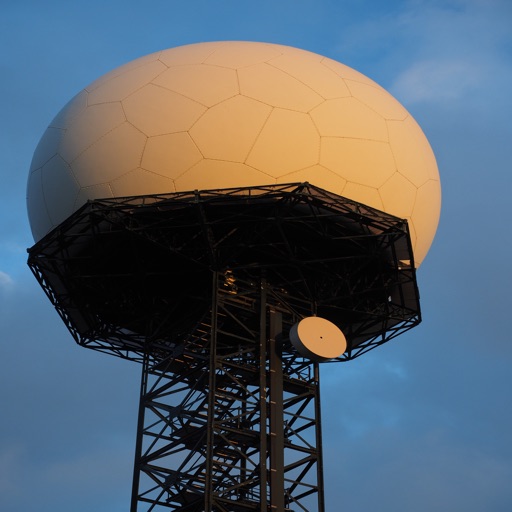
The Radar Analysis Toolbox is a collection of valuable equations handy for the RF engineer in the field
$1.99 · In-app purchases
Evidence scope: No current overall US chart position is available. Category-chart positions shown in discovery are a separate scope. Revenue is a directional model estimate, not verified earnings.
A product spec, screen plans, and build steps for your coding agent.
First kit free with a verified email
Combine features and design from your favorite apps.
Kit ready. Verify your email to download it.
Generating… usually about a minute.
What should your app do differently? Your note travels with the kit so your coding agent builds around your idea.
A product spec, phased build plan, differentiation notes, and screen references.
Illustrative example: an invoice app for independent contractors. Your kit is tailored to the app you choose; this is not its generated content.
Goal: Send a clear invoice after finishing a job.
Invoice editor: Client at the top, editable line items in the middle, total and preview action at the bottom.
States: Empty draft, validation errors beside each field, exporting, and a retry action that preserves the draft.
Hypothesis: Contractors need faster repeat invoices more than more templates.
First experiment: Test duplicating a previous job with five contractors. Watch where they hesitate before expanding the feature set.
The full kit adds a phased build plan, evidence notes, tool prompts, and implementation guidance. It is a plan for your coding agent, not a finished app.
Usage: Mechanics are fair game; never reuse the original name, branding, assets, or verbatim copy.
JavaScript is required to complete mailbox verification.
Good fit for mobile-first iOS and Android prototypes with managed app scaffolding.
Rork plan preview for Radar Analysis Toolbox: map the core Business workflow, choose the smallest differentiated feature set, define the data and monetization boundaries, then prototype the riskiest user journey first.
Preview ready. Verify your email to reveal and copy the full prompt.
JavaScript is required to complete mailbox verification. Return to this prompt preview.
Affiliate link: CloneChart may earn a commission at no extra cost
These are generated suggestions, not verified review quotations. Check current App Store reviews and speak with users before treating a possible gap as a requirement.
Hypothesis 1
Assumption to check: Limited user guidance for new users
Validate with people who use this workflow before building.
Hypothesis 2
Assumption to check: Lack of advanced analysis features
Validate with people who use this workflow before building.
Hypothesis 3
Assumption to check: Complexity in data input
Validate with people who use this workflow before building.
Hypothesis 4
Assumption to check: No clear sharing options
Validate with people who use this workflow before building.
Original App Store material. Ratings and screenshots describe the existing app, not proof of demand for your version.
The Radar Analysis Toolbox is a collection of valuable equations handy for the RF engineer in the field. The user can input values for each variable, press solve the equation, and plot these equations all from the palm of their hand. No more gathering data and then running back to the office to solve quick calculations. The Radar Analysis Toolbox quickly plots and solves single or swept values, providing performance estimates to keep your technical discussions moving and validating those complicated signal to noise ratios. With over 60 interactive equations to select from, we hope you find the application as useful as we do! And we look forward to your comments and suggestions. Categories and equations included are: Radar Equations Single Value Analysis Received Power - Monostatic Received Power - Bistatic Signal-to-Noise Ratio [SNR] Maximum Detection Range Swept Value Analysis Received Power - Monostatic Received Power - Bistatic Signal-to-Noise Ratio [SNR] Maximum Detection Range Distributed Coherent Radar Single Value Received Power - Monostatic Received Power - Bistatic Signal-to-Noise Ratio [SNR] Maximum Detection Range Communication Equations Single Value Analysis Energy Per Symbol - to - Noise Power Spectral Density Ratio [Eb/No] Carrier - to - Noise Ratio [C/N] Carrier - to - Noise Density Ration [C/No] Energy Per bit - to - Noise power Spectral Density Ratio [Eb/No] EW Equations Single Value Analysis [J/S]: Stand-in Jammer Monostatic Radar [J/S]: Stand-in Jammer Bistatic Radar [J/S]: Stand-off/in Jammer Main Lobe Injection [J/S]: Stand-off/in Jammer Side Lobe Injection Complementary Equations Time-Bandwidth Product Range Resolution - Pulse Width Range Resolution - Bandwidth Duty Cycle Power Density Electric Field Intensity Maximum Unambiguous Doppler Velocity Doppler Frequency Maximum Unambiguous Range Maximum Unambiguous Range & Doppler Velocity - Frequency Dependence Effective Isotropic Radiated Power ]EIRP] dB Conversions Friis Equation Noise Power and Density Shannon - Hartley Limit RCS Equations Sphere Rectangular Flat Plate Dihedral Trihedral - Triangular Plate Trihedral - Square Plate Trihedral - Curved Plate Cylinder Circular Flat Plate Finite Cone Semi-Infinite Cone Ogive Paraboloid Helpful Antenna Equations Far Field Distance Reactive Near Field Distance Parabolic Reflector Gain Parabolic Antenna Beamwidth Estimate Antenna Downtilt Ground Coverage Half Wavelength Dipole Calculator Monopole Length Calculator Helpful Geometry Equations Hypotenuse Chord Length SOH CAH TOA Atmospheric Attenuation Attenuation due to water and oxygen Attenuation due to combined water and oxygen Calculate Atmospheric Losses
Written user reviews are not shown here. Check current App Store reviews >
Plan a focused first version with your coding agent. These are planning assumptions, not a delivery guarantee.
Choose one audience and one core workflow. Use the kit to agree on its screens, data, and acceptance criteria before building.
Decide which secondary features, integrations, and platform support can wait. Your version does not need to reproduce everything in the original.
Validate external services, specialist technology, data access, and ongoing costs for your chosen scope.
From the Build Kit assessment.
A reliable timeline needs an agreed scope and a technical check. Ask your agent to estimate the phases in BUILD_PLAN.md after that review.


