Feature spec
Goal: Send a clear invoice after finishing a job.
- Add a client, line items, a due date, and payment instructions.
- Preview the total before exporting a PDF.
- Keep an editable draft if export fails.
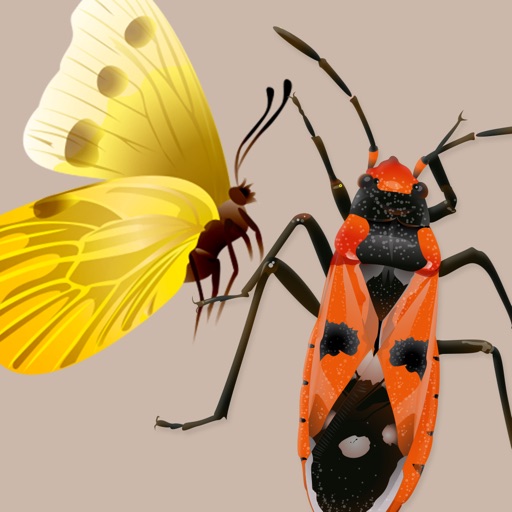
Insects make up the vast bulk of species diversity, with just over a million described species organized into about thirty major subgroups called orders
$1.99 · In-app purchases
Evidence scope: No current overall US chart position is available. Category-chart positions shown in discovery are a separate scope. Revenue is a directional model estimate, not verified earnings.
A product spec, screen plans, and build steps for your coding agent.
First kit free with a verified email
Combine features and design from your favorite apps.
Kit ready. Verify your email to download it.
Generating… usually about a minute.
What should your app do differently? Your note travels with the kit so your coding agent builds around your idea.
A product spec, phased build plan, differentiation notes, and screen references.
Illustrative example: an invoice app for independent contractors. Your kit is tailored to the app you choose; this is not its generated content.
Goal: Send a clear invoice after finishing a job.
Invoice editor: Client at the top, editable line items in the middle, total and preview action at the bottom.
States: Empty draft, validation errors beside each field, exporting, and a retry action that preserves the draft.
Hypothesis: Contractors need faster repeat invoices more than more templates.
First experiment: Test duplicating a previous job with five contractors. Watch where they hesitate before expanding the feature set.
The full kit adds a phased build plan, evidence notes, tool prompts, and implementation guidance. It is a plan for your coding agent, not a finished app.
Usage: Mechanics are fair game; never reuse the original name, branding, assets, or verbatim copy.
JavaScript is required to complete mailbox verification.
Good fit for mobile-first iOS and Android prototypes with managed app scaffolding.
Rork plan preview for Key to Insect Orders - Revised: map the core Reference workflow, choose the smallest differentiated feature set, define the data and monetization boundaries, then prototype the riskiest user journey first.
Preview ready. Verify your email to reveal and copy the full prompt.
JavaScript is required to complete mailbox verification. Return to this prompt preview.
Affiliate link: CloneChart may earn a commission at no extra cost
These are generated suggestions, not verified review quotations. Check current App Store reviews and speak with users before treating a possible gap as a requirement.
Hypothesis 1
Assumption to check: Limited search functionality can frustrate users.
Validate with people who use this workflow before building.
Hypothesis 2
Assumption to check: Lack of user engagement features like quizzes or games.
Validate with people who use this workflow before building.
Hypothesis 3
Assumption to check: In-app purchase confusion may deter users.
Validate with people who use this workflow before building.
Hypothesis 4
Assumption to check: Static content may lead to user drop-off.
Validate with people who use this workflow before building.
Original App Store material. Ratings and screenshots describe the existing app, not proof of demand for your version.
Insects make up the vast bulk of species diversity, with just over a million described species organized into about thirty major subgroups called orders. Orders are in turn divided into families, families are divided into genera, and genera are divided into species. Properly defined; orders, families and genera are each groups of species that have descended from a unique common ancestor, as a result of which they share similar structural characteristics and have certain biological attributes in common. Not all insect orders are equal in species number; some have just a few hundred species while the larger orders have hundreds of thousands of species. Most insects are in just four large orders: Diptera, Coleoptera, Lepidoptera and Hymenoptera. The range of structural characteristics and biological features tends to be broader in the more species-rich orders. Predictions about the biology, behaviour and ecology of an insect can often be made once you know its order. But how can you know the order to which an insect belongs? Insects can be identified in various ways. Comparing a specimen with a book of illustrations of identified insects is one way. Using a printed key is another way. This Lucid Mobile key combines the advantages of these methods and adds a new dimension of simplicity and power to the process of identification. This simple key aims to identify most common adult insects to the level of order. It has been designed for a range of users, including advanced secondary students, beginning undergraduates and others interested in entomology, and includes information about the structure and biology of insects as well as their identifying features. Three of the groups included in this key (Protura, Collembola and Diplura) are six-legged arthropods treated as insects in the vernacular sense, but now usually formally classified in their own order, outside the order Insecta. How can you tell if an insect is an adult so it can be identified using this key? That is a simple question without a simple answer. If your insect has fully-developed, functional wings then it is an adult. However, some adult insects have reduced, non-functional wings and others have no wings at all. In these cases the adult forms have fully developed genitalia at the apex of the abdomen. Many, but not all, nymphal or immature forms are identifiable using the same features used to identify adults. The 'Key to Insect Orders' was originally created by staff at the Department of Entomology at the University of Queensland, Brisbane, Australia (Gordon Gordh; David Yeates; Tony Young; Sue McGrath), based on the simplified keys to insect Order found in Collecting, Preserving and Classifying Insects by E.C. Dahms, G.B. Monteith and S. Monteith (Queensland Museum, 1979), Worms to Wasps by M.S. Harvey and A.L. Yen (Oxford University Press, 1989) and A Field Guide to Insects in Australia by P. Zborowski and R. Storey (Reed Books, 1995). This new edition of Insect Orders has been revised by Professor Steve Marshall at the University of Guelph, Ontario, Canada. This app was created using the Lucid suite of tools, for more information please visit https://www.lucidcentral.org
Written user reviews are not shown here. Check current App Store reviews >
Plan a focused first version with your coding agent. These are planning assumptions, not a delivery guarantee.
Choose one audience and one core workflow. Use the kit to agree on its screens, data, and acceptance criteria before building.
Decide which secondary features, integrations, and platform support can wait. Your version does not need to reproduce everything in the original.
Validate external services, specialist technology, data access, and ongoing costs for your chosen scope.
From the Build Kit assessment.
A reliable timeline needs an agreed scope and a technical check. Ask your agent to estimate the phases in BUILD_PLAN.md after that review.


